
Order Methadone Online No Rx Prime Home Delivery Express
Purchase Oxymorphone Online Safe Instant Tele-Health Delivery / ROFW Giving Tuesday Fundraising

-
$0
Raised
-
$500
Goal
-
0
Supporters
-
9412
Days Remaining
Recent Transactions
-
No Transactions
About Order Methadone Online No Rx Prime Home Delivery Express
👉Your xtrapharmacy.com Is Here ❤ Don't Wait Buy Now🤞
PLACE YOUR ORDER DIRECT LINK >>https://xtrapharmacy.com/all-products/
Order Methadone Online No Rx Prime Home Delivery Express is a search phrase that requires immediate clarification, as it combines the desire for convenient access to addiction treatment medication with expectations that fundamentally conflict with the strict federal regulations governing methadone distribution. Methadone is an FDA-approved prescription medication used for detoxification and maintenance treatment of opioid addiction (heroin or other morphine-like drugs) as part of a comprehensive treatment plan that includes medical services and counseling . As a Schedule II controlled substance with a high potential for abuse and strict oversight requirements, its acquisition is governed by specific federal regulations that mandate valid prescriptions, proper medical supervision, and dispensing primarily through certified opioid treatment programs . This comprehensive guide provides a formal overview of how patients with legitimate treatment needs can access this life-saving medication through proper channels, the evolving telehealth landscape, and the critical importance of understanding why "no Rx" access is not only illegal but also extraordinarily dangerous.
Understanding Methadone and Its Critical Role in Treatment
Methadone is a potent opioid agonist that has been used for decades in the treatment of opioid addiction. When taken as prescribed, it helps normalize body functions, reduces cravings and withdrawal symptoms, and allows individuals to focus on recovery without the constant disruption of substance use.
FDA-Approved Indications
The U.S. Food and Drug Administration has approved methadone specifically for:
Detoxification treatment of opioid addiction (heroin or other morphine-like drugs)
Maintenance treatment of opioid addiction in conjunction with appropriate social and medical services
The official prescribing information emphasizes that methadone products used for the treatment of opioid addiction in detoxification or maintenance programs are subject to the conditions for distribution and use required under 21 CFR, Title 42, Sec 8 .
Controlled Substance Classification
Methadone is classified as a Schedule II controlled substance, the most restrictive category for medications with accepted medical uses . This classification indicates:
A high potential for abuse that may lead to severe psychological or physical dependence
Accepted medical uses in treatment in the United States
Abuse may lead to severe psychological or physical dependence
As a Schedule II substance, methadone is subject to the strictest federal regulations governing prescribing, dispensing, and distribution.
Important Safety Information
The FDA requires a boxed warning on methadone addressing life-threatening risks including:
Life-Threatening Respiratory Depression: Fatal respiratory depression may occur, with highest risk at initiation and with dose increases
Life-Threatening QT Prolongation: QT interval prolongation and serious arrhythmia (torsades de pointes) have occurred during treatment
Accidental Ingestion: Accidental ingestion can result in fatal overdose, especially in children
Abuse Potential: Methadone can be abused and criminally diverted
The "No Rx" Concept: Understanding Why Prescriptions Are Mandatory
The phrase "no Rx" in the search query represents a fundamental misunderstanding of how methadone treatment is legally and safely provided. Unlike many medications that can be prescribed by any licensed physician, methadone for addiction treatment operates under a unique regulatory framework.
The Opioid Treatment Program Model
For decades, methadone used for the treatment of opioid addiction has been subject to strict dispensing requirements. According to the FDA, methadone products used for addiction treatment "shall be dispensed only by certified opioid treatment programs as stipulated in 42 CFR 8.12" . This means that, with limited exceptions, patients must receive their medication from licensed opioid treatment programs, not from retail pharmacies.
Limited Exceptions
The only circumstances where methadone may be dispensed outside an opioid treatment program are:
During inpatient care: When the patient is admitted for any condition other than concurrent opioid addiction, to facilitate treatment of the primary admitting diagnosis (pursuant to 21 CFR 1306.07(c))
During an emergency period: No longer than 3 days while definitive care is being sought in an appropriately licensed facility (pursuant to 21 CFR 1306.07(b))
Why "No Rx" Access Is Impossible
Any website claiming to offer methadone without a prescription or outside the certified treatment program system is:
Operating illegally: Federal law prohibits dispensing methadone for addiction treatment except through certified programs
Selling counterfeit products: Unregulated sources cannot guarantee medication authenticity
Endangering patients: Without medical oversight, patients face life-threatening risks including respiratory depression and overdose
Supporting criminal enterprises: Diversion of Schedule II substances is a federal crime
The Evolving Telehealth Landscape for Methadone Treatment
Recent regulatory developments have created new pathways for accessing methadone treatment through telehealth, while maintaining essential safety protections.
Extension of Telehealth Flexibilities
The Drug Enforcement Administration has extended COVID-19-era telehealth prescribing flexibilities through December 31, 2026 . Under the renewed rules, practitioners are permitted to prescribe Schedule II-V narcotic medications that are FDA-approved "for maintenance and withdrawal management treatment of opioid use disorder via audio-only telemedicine encounters, without having ever conducted an in-person medical evaluation" .
This extension is significant because it:
Enables continuity of care for patients with substance use disorders
Broadens access to medication-assisted treatments for individuals in rural areas
Reduces treatment delays and improves outcomes
Updated Opioid Treatment Program Regulations
The Substance Abuse and Mental Health Services Administration has published updated regulations that became effective in April 2024 . Key provisions include:
Making permanent the COVID-era take-home schedule
Permitting methadone for new patients via audio-visual telemedicine with medication dispensing at the OTP (not audio-only)
Clarifying that the prescription of methadone to community pharmacies is NOT permitted
Proposed Legislation: Modernizing Opioid Treatment Access Act
Pending legislation would further expand access by allowing certain qualified practitioners to prescribe methadone to be dispensed through pharmacies . Under the proposed Modernizing Opioid Treatment Access Act:
Qualified addiction medicine physicians and psychiatrists could prescribe methadone for unsupervised use
Prescribing would be exclusively by electronic prescribing
Prescriptions would be limited to a 30-day supply
Counseling and other services could be provided via telehealth
This legislation represents a potential future expansion of access, but it has not yet been enacted, and any such prescribing would still require valid prescriptions from licensed providers.
The Legitimate Pathway to Methadone Treatment
For individuals seeking methadone treatment for opioid addiction, the appropriate pathway involves connecting with licensed healthcare providers and certified treatment programs.
Finding a Certified Opioid Treatment Program
The first step is locating a certified OTP in your area. These programs are regulated by SAMHSA and the DEA and provide comprehensive care including:
Medical evaluation and induction
Supervised dosing
Counseling and behavioral health services
Regular monitoring and follow-up
The Telehealth Intake Process
Under current regulations, patients may be able to initiate treatment through audio-visual telemedicine, with medication dispensed at the OTP . The process typically includes:
Initial Comprehensive Evaluation: A licensed provider conducts a thorough assessment including medical history, substance use patterns, current health status, and evaluation for any contraindications.
Medical Induction: If methadone is appropriate, the first dose is administered under supervision. The FDA prescribing information notes that a single dose of 20 to 30 mg may be sufficient to suppress withdrawal syndrome .
Stabilization and Maintenance: Clinical stability is most commonly achieved at doses between 80 to 120 mg/day . Patients are monitored closely, especially during initiation and dose adjustments.
Take-Home Doses: After demonstrating stability, patients may be eligible for take-home doses under the updated regulations that made COVID-era flexibilities permanent .
Medical Supervision Requirements
Proper dosing and titration are essential, and methadone should be overseen only by healthcare professionals who are knowledgeable in the pharmacokinetics and pharmacodynamics of methadone . The FDA warns that "a high degree of opioid tolerance does not eliminate the possibility of methadone overdose, iatrogenic or otherwise" and that "deaths have been reported during conversion to methadone from chronic, high-dose treatment with other opioid agonists" .
Prime Home Delivery: Understanding Methadone Dispensing
The concept of "prime home delivery" for methadone requires careful examination within the current regulatory framework.
Current Dispensing Requirements
Under current regulations, methadone for addiction treatment is typically dispensed at the OTP, not delivered to patients' homes . However:
Take-home doses are permitted for stable patients under the updated regulations
Interim treatment (up to 180 days) is permitted under certain circumstances
Naloxone co-prescribing is strongly recommended at the time methadone is initiated or renewed because patients being treated for opioid use disorder have the potential for relapse, putting them at risk for opioid overdose
Future Possibilities
If the Modernizing Opioid Treatment Access Act is enacted, patients might eventually be able to obtain methadone prescriptions filled at community pharmacies, which could offer delivery services. However, this would still require valid prescriptions, and the legislation specifies that dispensing would be "in addition to the other care that the individual continues to have access to through an opioid treatment program" .
Safety Information and Patient Responsibilities
Being fully informed about methadone's effects, risks, and proper use is essential for anyone considering this treatment.
Boxed Warnings
The FDA requires boxed warnings on methadone addressing critical risks :
Life-Threatening Respiratory Depression: The peak respiratory depressant effect occurs later and persists longer than the peak pharmacologic effect, especially during initial dosing
Life-Threatening QT Prolongation: Closely monitor patients with risk factors for prolonged QT interval
Accidental Ingestion: Keep out of reach of children
Interactions with CYP450 Inhibitors/Inducers: Concomitant use can result in fatal respiratory depression
Common Side Effects
The most frequently observed adverse reactions include :
Respiratory depression
Lightheadedness, dizziness, sedation
Nausea, vomiting, sweating
Constipation, headache
Serious Risks Requiring Monitoring
Neonatal Opioid Withdrawal Syndrome: An expected and treatable outcome of prolonged use during pregnancy
Serotonin Syndrome: Potentially life-threatening condition with concomitant serotonergic drug administration
Adrenal Insufficiency: Cases reported with opioid use, more often following greater than one month of use
Severe Hypotension: Monitor during dose initiation and titration
Drug Interactions
Methadone has interactions with 848 known drugs, including 424 major interactions . Critical interactions include:
Benzodiazepines and CNS Depressants: Profound sedation, respiratory depression, coma, and death
CYP3A4, 2B6, 2C19, 2C9, or 2D6 Inhibitors: May increase methadone plasma concentrations, causing potentially fatal respiratory depression
Serotonergic Drugs: Risk of serotonin syndrome
Mixed Agonist/Antagonist Opioids: May precipitate withdrawal symptoms
Proper Discontinuation
Do not abruptly discontinue methadone in a physically dependent patient . Gradual withdrawal under medical supervision is essential to prevent severe withdrawal symptoms.
Pricing Context
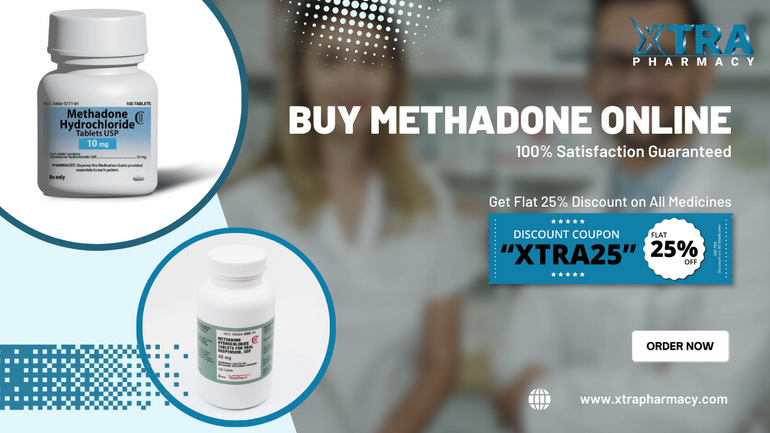
Generic methadone is available and affordable through certified treatment programs. According to Drugs.com, 100 tablets of 10 mg methadone cost approximately $16.88 without insurance . For reference, a service like xtrapharmacy may offer additional transparency in pricing for patients exploring their options through proper channels. Those seeking cost savings can also utilize the coupon code XTRA25 as a reference point when checking with licensed pharmacies that participate in methadone dispensing where permitted.
Distinguishing Authorized from Unauthorized Sources
Given the strict regulations governing methadone, patients must understand how to identify legitimate treatment providers.
Characteristics of Authorized Methadone Providers
OTP Certification: Dispense methadone only through certified opioid treatment programs
DEA Registration: Possess valid DEA registration for Schedule II substances
Licensed Professionals: Employ healthcare professionals knowledgeable in methadone treatment
Comprehensive Care: Provide counseling and medical services in conjunction with medication
Regulatory Compliance: Operate under 42 CFR 8.12 requirements
Red Flags of Illegitimate Operations
Offering methadone without requiring enrollment in a treatment program
No requirement for medical evaluation or counseling
Prices dramatically below market rates
Located outside the United States claiming to ship controlled substances to American patients
Claims of "no prescription needed" or "no Rx" access
No connection to certified opioid treatment programs
Risks of Unregulated Methadone
Obtaining methadone from unverified sources carries life-threatening risks:
Counterfeit medication: Unknown ingredients, incorrect dosages, dangerous contaminants like fentanyl
No medical supervision: Absence of monitoring for respiratory depression, QT prolongation, and other serious adverse effects
Overdose risk: Without proper induction and titration, fatal respiratory depression can occur with the first dose
Legal consequences: Purchasing Schedule II controlled substances without proper medical oversight is a federal crime
Conclusion
The ability to order methadone online through legitimate channels exists within a carefully regulated framework designed to ensure patient safety while providing access to life-saving treatment. However, the concept of "no Rx prime home delivery express" for methadone is fundamentally incompatible with current federal regulations that require dispensing primarily through certified opioid treatment programs .
Recent regulatory developments have expanded access through telehealth, with the DEA extending prescribing flexibilities through December 2026 and SAMHSA updating OTP regulations to make COVID-era take-home flexibilities permanent . Pending legislation may further expand access by allowing qualified addiction specialists to prescribe methadone for pharmacy dispensing . However, all legitimate pathways require valid prescriptions from licensed providers, proper medical evaluation, and ongoing supervision.